Showing posts with label ERP. Show all posts

SAP Project Introduction With Best ERP

The world best and popular ERP and SAP Project Introduction has good practices to implement for best results.SAP R/3 project had the aim of implementing an ERP (Enterprise Useful resource Planner) back-finish system protecting vital enterprise areas of the company, a mySAP.com project has the aim of designing and implementing an e-enterprise platform, which provides all the advantages of the model new economic system and uses the potential for an enormous marketplace enabled by the Web and Net technology.

mySAP InitiativesA mySAP.com challenge may involve the design and implementation of one or more mySAP solutions. A SAP R/three implementation within mySAP is smart if prospects shouldn't have an built-in.ERP system and need to pursue the absolute best integration among functions; however, most often a mySAP.com challenge is the pure evolution for current and productive SAP R/3 customers.

Like traditional R/3 implementation projects, implementing mySAP options is essentially a business project (e-enterprise), and so enterprise managers ought to normally lead it. However there is a elementary distinction by means of implementation prices and efforts that companies must be aware of. In the case of mySAP projects, know-how issues have a approach more necessary position and should be rigorously considered.

Even when the mySAP solutions are targeted on strategic business processes, the mySAP implementation tasks should be seen as part of the overall vision of the company. mySAP solutions still present a horizontal view of the enterprise processes, simply because the ERP system used to do, even when now the combination can be each intra- and intercompany, cross-system, and not simply on the database and data mannequin levels.

SAP is making use of the same success elements that led R/three to be the business working system of many corporations around the globe to mySAP world implementations: the fundamental role of the enterprise course of, the integration of the different components and options, the prototyping and implementation methods, the openness, and a stable technological foundation. And just as R/3 did, mySAP options are additionally aimed toward including implicit e-enterprise intelligence, by means of offering performance for the perfect e-business practices.

Customizing remains to be the fundamental process for configuring the mySAP solutions, however with additional possibilities, reuse of settings, and new services for making these duties even easier. In the end, and by way of the mySAP Greatest Practices, customizing effort is totally unneeded. Again, programming requirements are extremely diminished and left for those specific firm processes not fully lined on normal systems.

It is equally necessary in mySAP initiatives that upper administration is dedicated, understands the environment, and thinks that one of these undertaking is not only an IT project. The vary of solutions throughout the mySAP.com initiative incorporates not solely new Internet expertise, but additionally environment friendly and collaborative e-enterprise processes, which might lead to organizational or structural adjustments for dealing with new markets and new enterprise partners.

Implementing mySAP means to arrange and configure one or more of the mySAP solutions to handle the company’s new information needs and collaboration fashions enabled by the Internet and to help effectively the present and future e-enterprise processes.

Based on the character of the mySAP initiatives, a company might implement one or extra of the SAP options or the migration of the classical R/3 methods to a SAP environment. Nonetheless, implementing SAP options doesn't imply migration from R/3, however integration with it. An SAP R/three improve is perhaps wanted, depending on the current R/3 release and the diploma of integration required with the remainder of the SAP solutions. R/three really ought to be considered the ERP answer within the mySAP.com platform.

The actions to be performed by the undertaking group should be supported by a corresponding strong implementation methodology. It was with R/three that SAP developed the ASAP (Accelerated SAP) implementation answer set as the set of tools, processes, and services to ensure successful projects. Within the more complex SAP world, the set of implementation tools have developed and improved for overlaying a full resolution cycle and are supported by Internet instruments and interfaces to make it not only easier, but also more person-friendly.

mySAP Implementation Instruments

With the mySAP platform, SAP has evolved and included new implementation instruments and support for facilitation of the implementation of the SAP solutions, including a model new complete umbrella covering the full answer life cycle administration to preconfigured systems.

  1. Solution life cycle management. SAP calls resolution life cycle management the full life cycle method for the implementation and steady improvement of enterprise software. Under this umbrella lies the gathering of tools and methodologies to be used by SAP clients and consultants from the process of analysis to the implementation and to steady feedback and improvement. These tools are the ASAP methodology, the C-Enterprise Maps (Collaborative Enterprise Maps), the Solution Composer, and the Answer Architect.
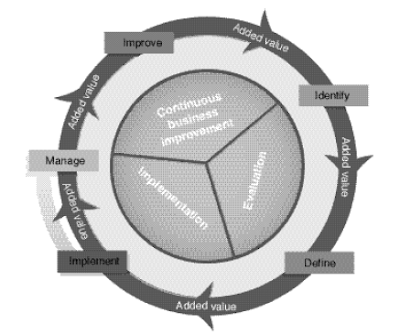
  2. ValueSAP. This was the primary initiative in the form of a set of tools for supporting the complete buyer cycle for the analysis and implementation of a collaborative e-enterprise platform, and so to assist customers to transition to mySAP.com solutions. ValueSAP consisted of supporting 5 phases within the solution cycle: identify, define, implementation, manage, and improve. Figure 9-1 reveals this cycle. Edition 2 of ValueSAP included ASAP, GlobalASAP, and the total solution life cycle for R/3, APO, CRM, BW, SAP Workplace, and SAP BBP (e-procurement).

? ASAP. That is the properly-recognized methodology for classical R/three implementation tasks, now out there for a quantity of of the SAP solutions. For most initiatives, ASAP, which encompasses the methodology, the venture plan and quite a few other of the essential tools for implementation, will be the primary framework for the definition of the activities and duties concerned in mySAP projects. A variation of ASAP generally identified as GlobalASAP is meant for
supporting multisite and multiproduct implementations. These tools are shipped in particular CD Kits throughout the mySAP solutions.
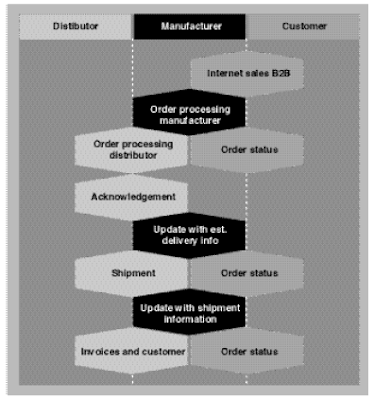
  1. Best Practices for mySAP.com. In short, the Greatest Practices for mySAP.com are preconfigured mySAP solutions obtainable for various industries and cross-business implementations.With this form of prepackaged solutions, prospects can rapidly build prototypes and get methods up and running. It's obviously additionally a good solution for hosting or for ASP (Application Service Provider) options provided by SAP partners.
  2. C-Enterprise Maps. These are SAP´s strategy for graphically describing and specifying integrated and collaborative business situations supported by mySAP solutions. They are notably oriented to inter enterprise collaboration, and so they can better present how the mySAP options fit into this specific sort of processes in seek for efficiency amongst collaborating companies. There are almost 200 totally different C-Business Maps in many business areas.
  3. Solution Composer. That is one other tool that can be utilized by SAP prospects to have a greater view of the scope of the mySAP.com solutions. The Resolution Composer includes access to the Resolution Maps, the C-Enterprise Maps, and the Role Maps.With this view, companies can make a better definition of the performance and their business processes, which are wanted for the implementation of SAP and SAP partners’ solutions.
  4. SOLAR (SAP Resolution Architect). That is best described as the mySAP.com implementation portal, and it's the latest implementation device provided by SAP (accessible in the first quarter of 2002). The intention is to provide a net based platform as a central point of entry to all the opposite implementation tools, content, and methodology for supporting the complete resolution life cycle on mySAP solutions: evaluation, implementation, fast adaptation, and continuous improvement. Moreover customers, partners can also use this tool to create content for their own implementation products.


Customizing and implementation instruments coming from traditional SAP R/3 systems. These tools allow for simpler and better-controlled adaptation of business processes inside mySAP environments. Amongst these are:

  1. IMG (Implementation Guide) as the electronic information for doing a step-by-step configuration of the mySAP systems
  2. Enterprise Configuration Units, which can be utilized for outlining reusable copies of configuration and customizing settings
  3. Test Workbench, which allows for setting take a glance at scenarios and performing integrated system and process checks
  4. E-Enterprise Case Builder. It is a tool used inside the SAP group to help prospects and prospects with a view of which would be the finest mySAP solutions in e-business scenarios. It allows for building enterprise circumstances based on the C-Enterprise Maps and then evaluating which mySAP resolution higher suits into the scenario. This will be a device that provides a better understanding of the mySAP.com solutions and present market trends in collaborative e-business.SAP Project Introduction With Best ERP will help us to make the business process better and hence better profits.
Related posts

sap internet transaction architecture
SAP internet transaction application components
SAP web application and business server pages
SENDING IDOC VIA STANDARD R3 SYSTEM
IDOC OUTBOUND TEIGGER PART TWO
IDOC OUTBOUND TRIGGER PART ONE
ABAP IDOC INBOUND BASIC TOOLS

My SAP Web Application Server What it is

SAP Web Application Server is amongst the primary technical foundations of the mySAP.com strategy and it is named as SAP WAS. It fully integrates Internet and Internet connectivity into the suite of the mySAP.com e-business platform. The SAP WAS is the platform of alternative for creating dynamic, scalable, and collaborative Net applications primarily based on the mySAP.com infrastructure.

The World Vast Internet know-how has utterly changed the business panorama in the final a number of years. With the intention to preserve tempo with this consistently altering environment, SAP has been providing Web-enabling applied sciences to its suite of products because the beginning of the Net era. But this is the first time that the Net method of doing issues will get totally built-in in the traditional SAP software server architecture. This achievement is of such importance that the main part of the SAP system, previously called SAP Foundation, is now known as the SAP WAS.

What Is a Internet Software Server?

When you consider all the elements of a Internet set up, it is easy to see that holding a very good development mannequin is form of a posh task. The ample selections of server operating programs, web page format kinds,Net embedded programming languages, database access and more, whereas giving an important vary of flexibility, have an implicit set of issues quite troublesome to take care of effectively. This is the purpose when an internet utility server comes to help us. It is common to speak about a three-tiered or three-layered structure as the muse of Net software servers. Those three layers may very effectively be summarized as follows:

  1. A presentation layer
  2. An application layer
  3. A database layer

For every of these layers, there must be a special program supposed to fulfill every process:

  1. A Net server program
  2. An utility server program
  3. A relational database administration system

This division of duties is often thought-about a nice way of separating different parts of a growth project as an alternative of an precise set up of software program (even if there are numerous products available in the market that attempt to mimic this division). The applying layer is the place where it is greatest to put the business program logic. The concept behind this separation is the easing of maintenance of programming and layouts and the avoiding of interference between the designing staff and the event team. Designs and layouts change fairly often within the Web, so a modification within the design should never affect the business logic within the application.

The database system offers the idea for knowledge storage and retrieval using some kind of query language, normally the SQL (Structured Question Language) if a relational database management system is in use. Different kinds of databases in widespread use at this time are techniques based mostly on directories, just like the LDAP (Light-weight Listing Entry Protocol).

Internet utility server usually as a system that integrates an surroundings to serve and develop Internet applications whereas separating program logic and presentation structure and providing a uniform and consistent methodology for data access.

The SAP WAS has the next traits with a purpose to fulfill this definition:

  1. A generic TCP/IP multithreaded server that is ready to implement different protocols with the utilization of plug-ins. The HTTP, HTTPS (HTTP over Secure Sockets Layer), and SMTP (Simple Mail Switch Protocol) protocols can be found in the meanwhile of this writing, but the hooks to program other protocols are there as a approach to depart the system open to additional enhancements.
  2. An entire development environment (the Object Navigator) based mostly on the SAP 4.6 Development Workbench that gives version management, transport requests, and concurrent work in a project.
  3. A improvement mannequin that gives a transparent separation between page structure design and program logic. The ABAP (Superior Enterprise Software Programming) language has been prolonged and now has objects that directly take care of HTTP requests and could be embedded inside HTML tags. The Server Facet JavaScript language for embedding inside HTML tags has been made obtainable; for the primary time, it's attainable to create an utility running inside a SAP system in a programming language aside from ABAP.
  4. A MIME (Multipurpose Web Mail Extensions) Repository offers easy tracking and maintenance of static documents and binary objects which can be related to a Net project. The MIME repository is used to add photos, sound or video files, PDF or Microsoft Workplace paperwork to a given venture, and so are components of its transports requests.
  5. The highly effective time-confirmed and well-established SAP Basis system provides the inspiration for reliable knowledge management. In conclusion, the SAP WAS is a whole system specifically optimized for the growth of Net-oriented purposes and is absolutely compliant with the accepted requisites for an optimum Internet application server design.
The Architecture of the SAP WAS

The know-how behind SAP Net Application Server may be thought-about as an improvement on the SAP application server know-how basis. Its aim is to offer a framework that will allow the SAP technological basis to process HTTP requests and requests coming from other Web protocols. This converts any SAP application server right into a full-featured Internet server that may immediately accept connections from Web shoppers and send responses to them. The SAP WAS can also work as a Net consumer, producing requests to other Internet servers and processing the responses sent again by them.

This enhanced functionality of the SAP WAS is dealt with within the SAP kernel by technique of a further process. This course of is the ICM (Web Communication Manager). From the interior SAP architecture, the ICM might be seen as a special work course of that's answerable for handling connection requests from exterior purchasers and creating requests directed to exterior servers when requested to by a program running in any of the work processes. It is designed as a multi threaded server, and it communicates with the relaxation of the work processes by memory pipes positioned in shared memory.


The ICM is an external course of that is launched by the dispatcher if the system is configured to take action in the occasion profile. The internal server architecture of the ICM is a relaunched pool of employee threads to allow optimum coping with a selection of simultaneous Internet requests. Their description is given as follows.
  1. Thread control. This thread accepts incoming TCP/IP requests and calls a worker thread (or creates one if there aren’t any accessible) to course of the request.
  2. Worker thread. This thread is in cost of dealing with the request and the response of a connection. The method in which a working thread will handle a connection is set by the plug-in. The plug-in will outline the protocol below which the processing of the connection is to be accomplished (HTTP, SMTP, or others).
  3. Watchdog. This thread is responsible of looking ahead to timeouts and idle time of working threads. If a timeout happens (normally when ICM is waiting for a response), the watchdog will grab the connection and inform the thread control that the working thread is free for different tasks and when a connection has been received.
  4. Signal handler. This thread will course of indicators despatched by the working system or from one other process.
  5. Connection info. This table will keep details about the state of every existing network connection, equivalent to reminiscence pipes or plug-in data.
  6. Reminiscence pipes. These are reminiscence-based mostly communication objects. They deal with the communication of knowledge between the ICM and the work processes. There are four pipes for each connection: one for the request, one for the response, one for control data, and one out-of-band pipe.
The SAP WAS Growth Mannequin

The SAP WAS is predicated on a Web-oriented improvement model. This mannequin has the next characteristics:

  1. Web page-based mostly development model. Which means that Web purposes are constructed around Net pages.
  2. Event-pushed model. The events are often generated by navigation actions taken by the user, equivalent to clicking on a hyperlink or pushing Submit buttons.
  3. Server side scripting. That is to say that programming code can be inserted in Internet pages. That is crucial for the dynamic generation of Internet content in response to person input. This code ought to normally be presentation-related code, and no enterprise logic must be in it.
  4. Event-associated programming code. This needs to be in handler programs supposed for that function. This additionally gives a method of eliminating presentation tasks from the programming language by leaving a lot of the presentation to the HTML layout.
  5. Static (non ceaselessly changing) objects and documents in non-SAP format. For example, Microsoft Office documents are saved in a repository so as to maintain monitor of them and to relate them to the application. The combination of all these characteristics is done around the BSP (Enterprise Server Pages). Truly, a BSP software is the conventional method of growing packages within the SAP WAS. BSP applications are normally not display screen (dynpro) based SAP applications; as an alternative, they're meant to be accessible not via the SAPGUI, but by a Internet browser.
The SAP WAS improvement mannequin additionally consists of predefined ready-to-use Net controls that are supposed to ease and provides a consistent side to Internet web page design. These controls are gathered together within the WCF (Net Control Framework) and embody programming constructions to create tables, kinds, buttons, and other presentation elements.

The basis for the Web-oriented growth mannequin inside the SAP system is the enhancement of the traditional ABAP programming setting with objects that enable the direct handling of low-level HTTP requests. This supplies an infrastructure for extending SAP Internet performance even outdoors the BSP application. Truly, the BSP run time is nothing greater than a giant ABAP program (the BSP processor) utilizing these Net objects. This extension of the ABAP language is the ICF (Internet Management Framework).

This development model has been introduced within the SAP system, adopting the applied sciences for Net improvement which were proven in other environments, notably the Microsoft IIS (Internet Info Server) ASP (Software Service Supplier) improvement mannequin and the JSP ( Java Server Pages) technology present in most modern Internet server programs.My SAP Web Application Server GIVES control over the flow in the best ERP.

Related posts

sap internet transaction architecture
SAP internet transaction application components

SAP authorization and client administration in mysap.com
SAP Authorization and ALE
SAP SCRIPTS PART 6
SAP SCRIPTS PART 7
SAP SCRIPTS PART 8

MySAP Environment Security Solutions

MySAP has a good safety protections for all security issues that could possibly occur in Mysap environment and here is the discussion about all possible solutions that is available with in the suite.Safety is increasingly being thought of one of many key factors to boost e-enterprise over the Web. Solely after we all, customers and companies, really feel safe and assured can we really appreciate the benefits of the Net financial system and start using the Internet as the worldwide village to do business. The mySAP.com strategy is well aware that security is one among the hottest matters on Net-enabled applications. Every skilled involved in fashionable mySAP initiatives is conscious that leveraging safety know-how and measures and having a sound security coverage is mandatory.

The information stored within the programs ranks among a company’s most vital and valuable assets. Moreover, addressing security during and after an SAP implementation not solely protects beneficial enterprise info, but additionally ensures continuous and secure programs operations.Because mySAP.com has been the SAP natural evolution for e-business, safety is predicated on the sound safety companies available in R/three techniques, plus the newest security technology. Subsequently, this chapter first consists of an introduction to conventional SAP’s traditional security ideas and different basic safety ideas and choices, relating again to issues handled in previous chapters, such because the authorization concept, the roles, and the central user administration. It then takes a deeper strategy into Single Sign-On options, the SNC (Safe Network Communications) interface, digital signatures, data encryption, PKI (Public Key Infrastructure) applied sciences, and privacy protection for person data. There are further sections explaining obtainable safety choices for consumer authentication, reminiscent of cookies, X.509 certificates for Internet connections, standards resembling HTTP-SSL (Secure Sockets Layer), and new Net security services. The chapter lastly includes an outline of the security services accessible for the mySAP Workplace and the mySAP Marketplace.

Safety inside mySAP.com

As a outcome of mySAP.com is, based on SAP, the place for doing business over the Web, it should even be the safe and assured place for doing so. It's well known that an important barriers to the enhance of digital commerce in on an everyday basis life are lack of trust of safety and privacy. For combating those barriers, collaborative enterprise processes among firms require a full range of safety measures and technologies in order that business information integrity and privacy is protected against unauthorized access. Safety is, more than ever, increasingly important, considering how knowledge and business processes develop past intranet ranges into Web collaborative situations which can be usually quite transparent to finish users. With these and lots of different considerations, SAP and its companions provide a full vary of security providers to make mySAP.com, in SAP’s phrases, “the secure place to do business.”

Goals of mySAP.com safety include:

  1. Set up of personal communication channels
  2. Use of strong authentication mechanisms
  3. Implementation function concept for customers
  4. Offering proof of enterprise transactions
  5. Enforcement of auditing and logging

Amongst these objectives, the security providers accessible for mySAP.com environments are:

  1. The utilization of shopper and server certificates for user authentication
  2. SSO options to entry the total vary of mySAP.com parts
  3. The function-primarily based idea based mostly on exercise teams and authorizations
  4. Deployment of firewalls between programs and networks, in addition to safe protocols similar to HTTPS
  5. SNC and SSF (Safe Store and Ahead) for compliance with safety standards
  6. Its own Trust Middle

Before going into specifics of what the obtainable options and implementation issues for mySAP.com security are, the following sections introduce readers to common safety concepts. These sections may even go into the background of conventional SAP safety companies from the R/three age, most of which nonetheless apply into mySAP.com scenarios.

Overview of Safety Concepts

Conventional SAP implementation projects usually thought-about safety just because the design and realization of the authorization concept. At the software stage, the authorization concept (person masters, profiles, authorizations, exercise teams, roles) are key to providing access to needed transactions and ensuring safe entry to delicate data. As such, it is extremely necessary inside the SAP safety infrastructure. Nonetheless, systems within mySAP.com do have many different levels that could probably be doubtlessly attacked, and due to this fact, a consistent security strategy should additionally consider all these other layers and components of the SAP systems. Safety may be outlined from two different views, which have in common the objective of defending the company systems and knowledge assets. These two perspectives are:

  1. Safety as the safety measures and policies in opposition to unauthorized accesses by illegitimate users (both inner and external). An attack is considered internal when a SAP person tries to access or perform features for which he or she isn't allowed.
  2. Safety as the safety measures against hardware, software, or any different sort of environmental failures (disasters, fires, earthquakes, and others) utilizing safety applied sciences (backup, restore, disaster recovery, standby systems, archiving, and so on).

Safety Policy Fundamentals

Firms should implement some type of safety coverage to protect their assets, most importantly, however they're additionally required to adjust to their country’s authorized obligations, enterprise agreements, and business legal guidelines and regulations. For example, many international locations have some type of laws for shielding confidential data of employees. Additionally it is essential to maintain all monetary records for the tax authorities. And in terms of business companions, it is of great significance to make sure the confidentiality of economic agreements with vendors or customers.

Trendy information programs and applied sciences are both the means and the containers of the strategic and operative enterprise information. They're the identified but hidden treasures of corporations, and everyone desires to keep their coffer away from imply pirates.

The Security coverage is the set of procedures, standards, roles, and duties masking and specifying the entire security and organizational measures that must be followed by the companies to protect the business from threats and vulnerabilities. An method to safety can have the target of building a powerful safety policy. It ought to begin by assessing a danger evaluation to later implement, monitor, and implement such a policy. It is very important to appreciate the fact that security implementation by no means ends and have to be regularly updated, reviewed, communicated, applied, monitored, and enforced.

The security strategy and danger analysis should first take into account these primary points:

  1. What's to be protected? Corporations must establish these assets-such as crucial info (customer lists, worker private information, contracts), hardware, software program, intangibles (hours of operation, cost of non revenue and non production), or others-that require some type and a point of safety in opposition to unwanted and unauthorized access that would injury or destroy such assets.
  2. What are the attainable threats? The second safety subject is to determine the attainable sources of assault in your assets, in addition to the degree of vulnerability of your infrastructure. Threats are of various varieties and natures and are typically unknown. They're often intentional, but they will additionally be unintentional. They can be exterior threats or might be inner (for instance, by different geographical locations or by burned-out or frustrated workers).
  3. What safety measures can be taken? Lastly, the chance evaluation and the safety coverage must establish the most effective safety measures to effectively implement and implement such a policy. Measures might be customary measures included in the information methods capabilities, extra and exterior security infrastructure, and likewise behavioral rules. For example, a basic and strong security measure is the password that customers should provide to entry programs; nevertheless, it's nearly unimaginable with technical means to know whether or not somebody advised her or his password to someone else.
Effective in a safety coverage means that measures ought to in no way include such awkward procedures in order to hinder or make the customers’ jobs more difficult. Safety policies all the time follow a principle of controls, which implies that the safety technique should method the steadiness between the risks and the control measures. As indicated earlier, safety is a steady course of because new assets, new threats, or new technology will be identified and some threats or property become out of date and not have to be protected against. These facts will make the safety coverage a residing entity, which also includes the retraining of employees. Within the following sections, the SAP safety infrastructure is discussed so that you simply can better determine threats and vulnerabilities. You will also study which are the commonplace and nonstandard measures that could be utilized to raised shield and secure your assets.

Dangers and Vulnerabilities

The growing want for broad and open connectivity inside advanced SAP system landscapes, the number of elements throughout the architecture, and the options for exterior communications introduce risks of methods being attacked. The techniques are extra vulnerable when a safety policy is either insufficient or nonexistent at all. In these circumstances, folks trust that normal measures might be enough, but normally this isn't the case.

Just as an example, the following is a brief listing of menace varieties:

  1. External network attacks to make methods unavailable
  2. Exterior password cracking assaults
  3. Internal sabotage to make techniques unavailable
  4. Inner assaults for gathering confidential knowledge
  5. Unintentional inner attacks or misbehavior
  6. Trojan packages
  7. Intentional inner breach of security coverage
  8. Unintentional breach of security coverage
  9. Unknown assaults
As there are more dangers and fewer safety measures in place, the systems and subsequently the corporate property are extra vulnerable. They could be easily attacked.

Related posts

sap internet transaction architecture
SAP internet transaction application components
Authorization and implementation of SAP
Mysap market place introduction
Customer interface in mysap market place
sap work flow part 1
SAP ABAP SAMPLE CODE INTERACTIVE REPORT
SAP ABAP SAMPLE CODE ALV DOUBLE CLICK REPORT
Mysap market place and business flow

MySAP Market Place Customer Interface

MySAP market place has a comfortable customer interface that helps the people who are using it with ease.Customers entry Content Engine (iMerge) and its catalogs by approach of a Web browser.This Web-based mostly interface gives the benefits like

  1. As lengthy as users know the catalog’s URL and have been granted the acceptable entry rights, they will entry the catalog from any laptop with a Net browser.
  2. No other utility must be installed on a person’s computer. Content material Engine (iMerge) routinely generates catalog pages each time a person accesses the catalog.
  3. Any changes made by the administrator or to the supply knowledge are instantly mirrored on catalog pages.
  4. Customers navigate the interface through familiar Web techniques, comparable to looking out and following hyperlinks.

Administration
Directors use an interface much like the one seen by end users. The distinction between end-consumer interfaces and the one used by administrators involves the types of gadgets seen and the actions that can be carried out on those items. In brief, administration interfaces are for creating and managing catalogs, whereas end user interfaces are for looking catalogs. The administrator can create different administration interfaces; for example, it is attainable to divide up administrative responsibilities by roles, utilizing a unique interface for every role.

Every kind of things in Content material Engine (iMerge) (together with lessons, relations, agents, chores, and others) are classes. Administrators can create, modify, search for, and delete courses and situations of classes. Directors may also customize the appearance and conduct of present classes. For example, you presumably can management the order and styles (examine bins, menus, and so forth) of attribute relations showing on classes.

Constructing a Schema and Defining a Reference Schema

One of many key duties in utilizing Content Engine (iMerge) to create catalogs is to construct schemas. The true power of Content Engine (iMerge) comes from the flexibility to mixture catalogs from multiple knowledge sources, which requires designing a reference schema. Lastly, you'll have the opportunity to create person schemas, which are subsets of the reference schema.

A schema determines which objects customers see and which items of data they can view and update. It consists of a set of classes and a set of relations. A schema could comprise a group of lessons, their attributes, and a few tables. Info organized in numerous schemas poses some challenges, notably in searching and updating. Content Engine (iMerge) integrates a broad range of schemas into a flexible, accurate, and responsive information source. By enabling you to create a single catalog out of multiple catalogs (every with its own schema), Content material Engine (iMerge) resolves two varieties of heterogeneity:

  1. Bodily heterogeneity. Data is distributed amongst totally different places and saved in different formats.
  2. Conceptual heterogeneity. Problems of conflicting terminology, totally different structures, and missing information exist.

Writing Rules

Probably the most powerful features of Content material Engine (iMerge) is the way it handles rules, which let you specific relationships between tables. Guidelines play a key role in fixing the integration problem. Additionally they provide assist to implement constraints;for example, you may implement enterprise rules and verify for knowledge-entry errors.

No programming is necessary to construct a catalog in Content Engine (iMerge). The administrator defines guidelines in Content Engine (iMerge) via a degree-and click interface. This approach is more modular and makes it a lot simpler to write down and debug rules; you strategy every downside case by case. Modifications in information or guidelines for a vendor or buyer do not affect other distributors and buyers. Also, if one vendor’s knowledge supply goes down, only that vendor’s data goes down (until the catalog is cached in Content material Engine [iMerge]).


View Management

Content material Engine (iMerge) enables varied groups of customers to see totally different views.Whereas the general expertise is analogous for all customers, some groups require completely different levels of access than different groups. The catalog administrator controls access. For example, the catalog administrator can:

Create a view that shows price information and one other that doesn't ? Prevent users from accessing a view that they are not approved to see by using a few of the security mechanisms obtainable in Content Engine (iMerge)

Relational Logic Aggregation

The RLA (Relational Logic Aggregation) in Content material Engine (iMerge) is exclusive in its potential to deal with catalog issues. Relational logic extends the relational algebra present in commercially obtainable databases with functions to deal with lacking or incomplete information.RLA extends this highly effective relational logic to take care of enterprise guidelines and data from heterogeneous sources.

RLA contains a browser-based mostly mapping facility that allows non programmers to add new provider mappings, discrete purchaser mappings, and different crucial specifications with none programming. Through a sequence of dialogs, the issues dealing with information sources, incomplete or missing knowledge, and knowledge access are all addressed.

RLA addresses differences in information format. A multi vendor catalog should cope with the fact that completely different distributors store catalog data in several formats, together with relational databases, XML (out of date), tab-delimited text, and Net pages. Even when a single widespread format may very well be discovered, requiring distributors to change to a single format would not be desirable or practical.With its distinctive instruments, iMerge permits distributors to maintain most of their information in the unique form. iMerge can:

  1. Connect with knowledge in relational databases directly, without importing the knowledge
  2. Import information in many structured formats
  3. Extract information from unstructured sources

Dynamic Sourcing Architecture

What makes the RLA and the PCCS usable is the unique DSA (Dynamic Sourcing Architecture) of Content material Engine (iMerge). DSA consists of three parts:

  1. In-memory object-relational database engine
  2. Dynamic caching
  3. Powerful question optimizer

Content Engine (iMerge) has a novel in-memory object-relational database engine. This in-memory structure eliminates the overhead usually related with disk access and sophisticated relational databases. When dealing with a whole lot or thousands of consumers and suppliers, the fast response time and scalability provided by Content material Engine (iMerge) are critical.

The in-memory engine also permits the administrator of the Content Engine (iMerge) software to dynamically change the finest way knowledge is accessed with out altering the purposes using the database. More specifically, data might be cached locally reasonably than accessed from a distributed website simply through point and click. The catalog administrators have the pliability to deal with points such as security, community performance, availability, and backup/recovery.

Content material Engine (iMerge) makes use of the metadata for the Commerce-ready Catalog and the mappings for suppliers and buyers to implement the most recent query optimization techniques. Content material Engine (iMerge) is conscious of if knowledge is cached or remote and, more importantly, which suppliers may doubtlessly have the correct information. Entry plans are calculated to provide the perfect entry to the data. Data is then passed to the in-memory database for processing and presentation to the user.

DSA for Catalog Updates

One other challenge in aggregating data from a number of sources is preserving the information in the grasp catalog contemporary whilst distributors update information in their own particular person catalogs. Content Engine (iMerge) uses dynamic sourcing to ensure data foreign money when the information just isn't stored in Content Engine (iMerge). By means of dynamic, real time queries to individual sources with altering structures, Content Engine (iMerge) maintains a continuing flow of correct information. A related problem overcome by Content material Engine (iMerge) is holding the catalog running as distributors are added and removed. Due to Content Engine (iMerge)’s modular architecture and the rule-based approach in which relationships in a catalog are outlined, directors can take away a vendor’s catalog without disrupting the master catalog; no software needs to be recompiled, so the catalog can function with no downtime. Similarly, including a new vendor’s catalog is largely a matter of writing guidelines that map the brand new source to the master catalog. The adjustments are immediately visible in the application. Finally, if one of many sources goes down as a end result of of site-specific technical issues, users can proceed to get solutions from the remaining sources.

Other parts of the catalog are:

  1. ACP (Auto Catalog Publisher). ACP creates catalogs out of supplier texts and pictures and deposits the created catalog on MarketSet. e-mails are sent to the provider, to registered consumers, and finally to Content material Refinery if conversion is requested.
  2. Content Refinery/XCP (XML Content Pipeline). XCP adjustments formats of the catalog, for instance, from Requisite catalog to a different format.
  3. MarketSet Analytics. The BIConnect (Enterprise Intelligence Connector) component from SAPMarkets converts XML paperwork into BWXML, a format suitable with the SAP BW (Business Data Warehouse). This enables marketplace house owners to simply apply the powerful analytics and reporting capabilities of BW to the marketplace data.
BIConnect is based on SAP Enterprise Connector with new Java providers for integration with the completely different information sources from the marketplace.

MarketSet Bulletin Board

The Bulletin Board (BB) enables companies to quickly share and locate info any form, together with enterprise opportunities (for example, auctions, RFP/RFQ processes, exchanges, categorized commercials) from the DPE. Any XML-enabled utility can put up communications on the Bulletin Board with a fixed XML format.

The Bulletin Board helps the full life cycle of broad-based mostly enterprise communications, from posting and publishing by means of tracking and retiring. Every of these postings known as a “word,” like a word posted on an actual bulletin board. Initiators (marketplace users creating a be aware) might use the Bulletin Board immediately


Respondents (market users enthusiastic about discovering and replying to a word) could browse or seek for notes in a big selection of ways utilizing the Bulletin Board. The Bulletin Board is scalable to the needs of the largest electronic marketplaces and fully supports integration with different marketplace services. In addition to being carried out using servlets, JSPs (Java Server Pages), and EJBs (Enterprise JavaBeans), the Bulletin Board communicates with different market companies using XML messages passed with XML Commerce Connector (XCC). These XML messages are written to the xCBL normal published by CommerceOne.As a end result of XML messages are designed for transport over the Internet, the Bulletin Board can obtain messages from companies on other marketplaces or from enterprises. This allows one marketplace to combination listings from a bunch of marketplaces or companies.

The Bulletin Board is constructed in a 3-tier architecture.

  1. The presentation layer supplies an intuitive interface and a uniform way of creating notes.
  2. The enterprise logic layer manages the notice life cycle.
  3. The info layer shops the data.

This architecture permits owner/operators to scale their system from setups as small as one machine for all layers, up to one or more machines for every layer. In addition to scalability, this architecture additionally supplies software flexibility and service manageability.

Bulletin Board Options

The following are the main options of the Bulletin Board:

  1. Connectivity with any marketplace service on any marketplace enabled with a laborious and fast XML format
  2. Normal integration with MarketSet Enterprise and Market-Set DPE
  3. Readily available integration with enterprise back-end techniques, for example SAP R/three
  4. Enabling free-kind communication (be aware descriptions) and promoting by certified parties in a controlled atmosphere
  5. Analysis of respondent requests for each posted observe
  6. Full life cycle assist for initiators
  7. Templates that pace creation of postings
  8. Bookmarks and Favorites for a extra customized experience
Related posts

sap internet transaction architecture
SAP internet transaction application components

SAP authorization and client administration in mysap.com
CODE MULTIPLE INTERACTIVE REPORT TWO
alv report with double click event
abap programming for mm module

SAP Authorization and Implementing the mySAP

SAP authorization is a way of getting a protection and security to the data and in the previous post we have dealt with this authorization with ALE and this post is like a continuation to that discussion.

Generating Authorization Profiles

Roles are maintained using the Profile Generator transaction PFCG, which robotically generates the authorizations comparable to the transactions which can be previously chosen using a menu tree for the consumer role. There is, nonetheless, some manual maintenance for these authorizations as a consequence of there are values that should be outlined by the client for every case: as an example, the organization structure allowed, activities, and so on.

When maintaining and generating profiles to be assigned to roles, the display exhibits a yellow light right by the object if the authorization objects will not be utterly maintained (don't have values assigned). When all values are assigned, the light becomes green. Once all values are adjusted for the authorization objects in accordance with the consumer necessities (the authorization project), the profile will be generated just by clicking on the Generate button.

Working without CUA

When the CUA is not activated, the project of customers to roles must be manually performed in every component system to point how users could have access to these systems. This project can also be carried out using the role administration transaction PFCG. As has been talked about, it is doable (and even quite frequent) to assign multiple role to users. It is also potential and typical to assign the identical role to several users.

The task of users to roles doesn't robotically activate the authorizations for them. For this process to happen, it is required to execute the operation known as a user comparison. By using this program, the system compares the actual user master report with the file because it has been defined with the project of the role. This course of can be launched both individually or massively, either interactively or in a batch job.

Assigning Users to Composite Roles

When the CUA is simply not activated, the project of customers to composite roles must be carried out within the WPS. As indicated in the earlier part, the assignment of a easy role to a consumer should be carried out in each of the component systems. When using the CUA utility, it's only required to assign the consumer to the composite role within the WPS. In this case, the straightforward roles are robotically assigned to the users in every of the part systems. In both cases, with or with out the CUA, updating the person master records must be performed utilizing the user comparability utility in each component system.

Once the composite roles are assigned to users in the WPS, the users can go online to the Workplace. The users can choose from the transactions or companies offered throughout the LaunchPad. All transactions will be executed on the corresponding part system.

Authorization for Connecting to the Workplace

All users who're going to connect with the Workplace are also required to have the authorization S_RFC with all values assigned (that is, the wildcard “ *”). Moreover, to permit users to personalize their entry to the Workplace, they have to additionally have the SAP_WORKPLACE_USER assigned. With this role, the customers can customize their MiniApps and their GUIs.

Configuring the mySAP Workplace:

Implementing a mySAP Office as an Enterprise Portal is an thrilling project, which requires a substantial amount of preparation, evaluation, design, and implementation. There are numerous technical details and duties that should not be ignored and must really be carried out to find a way to set the fundamental performance of the mySAP Workplace. These are the customizing settings required for defining such subjects as normal settings,Net server definitions, connections, classification of transactions, and so on.

Considerations Earlier than Implementing the mySAP

Before beginning the mySAP Office configuration, you should check that the system (Office server) is appropriately and utterly installed. This mainly means having the mySAP Basis (simply an R/three system) and the Office plug-in. If the SAPGUI for Windows or SAPGUI for Java goes for use, the corresponding entrance-end software program or Java plug-ins must be loaded.

Technical requirements are :
  1. As browser, Microsoft Web Explorer 5.0 or increased is necessary. Verify within the SAP Service Market for the availability of different browsers. If this release is not used, the Drag&Relate and drag and drop performance will not be available.
  2. An ITS instance is required for the Office and all the R/3 component systems to which users will connect from the Workplace.
  3. The Office server can be a standalone system from which to execute the main functions. These include:
  4. Function management
  5. CUA
  6. Configuration or development of MiniApps
  7. SSO
  8. Definition of RFC connections and logical techniques
  9. Era of transaction URLs
  10. Drag&Relate
  11. Customizing
  12. Office Middle ware server (an ITS server with specific companies for the Workplace) is needed.
  13. Server for the Drag&Relate performance is required.

Central Settings for the Workplace

The following record reflects the basic tasks that should be outlined for the Workplace. These duties are achieved with some of the transactions described earlier, in addition to by filling up some of the customizing tables.

  1. Registering logical system
  2. Creating RFC connections
  3. Registering an ITS server
  4. Creating particular person roles (adding transactions, stories or Net addresses)
  5. Creating authorization for single roles
  6. Assigning a user function (with out CUA)
  7. Transporting position to mySAP Office using a transport request
  8. Importing roles from element system by RFC
  9. Getting into the vacation spot system in a single position (including MiniApps)
  10. Creating composite roles
  11. Assigning a person function

Creating and Configuring MiniApps

MiniApps confer with any sort of utility, information, or service that can be visualized in a Internet browser frame. The MiniApps are proven in a push mechanism within the dwelling web page of the consumer of the Workplace. Users will see the MiniApps which were assigned to them in accordance with their role.

These are the primary options and characteristics of MiniApps:
  1. The set of MiniApps supplied in the mySAP Workplace depends upon the role of the user.
  2. MiniApps are self-contained Web paperwork that are offered by a URL, managed by the mySAP Workplace server. The useful resource itself can be wherever on the Web.
  3. MiniApps proactively present data to the users.

Examples of MiniApps are e-mail or calendar access, alerts, stories, There are several ways to create MiniApps. A few of them are as follows:

  1. Because they are at all times called using a URL, the easiest manner is to set a URL hyperlink to a Internet service or document. If that is the case, there is not any development at all.
  2. They are often developed using in style environments akin to Visual Fundamental (Visual Studio), Visible Age, and so on.
  3. They are often created by linking a BW Net report utilizing the ITS move logic.

The way to integrate a MiniApp in the Workplace is by simply including the URLs in the consumer’s role. This is carried out by selecting Goto/MiniApps from the Role Upkeep screen.

Integrating Non-SAP Systems

The combination of non-SAP systems depends on the sort of utility that needs to be built-in into the Workplace.Internet applications based on HTML can be built-in very easily, but it is also doable to integrate purposes using a browser plug-in, purposes installed on the local consumer, or by working on a Citrix Terminal Server.Internet-based mostly intranet or Web applications might be integrated into the Workplace by adding their URLs to a role. Commonplace Windows applications could be installed on the local consumer, or the applying can run on a Citrix.

Terminal Server and be displayed with a browser plug-in in the WorkArea of the Workplace. This additionally applies for the SAPGUI for Windows. You must decide on which way you need to integrate non-SAP functions into your Workplace. You'll be able to either embrace them by hyperlink in the LaunchPad of the person or execute them as MiniApps in the WorkArea. Applications integrated in the LaunchPad can run within the WorkArea of the Workplace or can begin in a separate window. MiniApps must be known as with a URL, so they need to be both primarily based on a HTML Internet software or run as a Java applet or ActiveX control. Just including hyperlinks to non-SAP applications to the LaunchPad or embedding them as MiniApps doesn't fulfill the necessities of actual integration, because third party applications often require an additional login process. So you must think about enabling those functions for SSO.

If you are using SSO cookies, this integration may be very restricted, as a consequence of SSO cookies solely work with the ITS or the SAPGUI for Windows. For utilizing SSO Tickets, SAP AG presents a library (sapsecu-lib) for checking SSO Tickets in third party applications. This fashion, existing intranet purposes will be integrated into the Workplace, and SSO will work. Client certificates (X.509) are qualified for SSO solutions in heterogeneous environments with SAP and non-SAP systems. X.509 is a public customary and is supported by all kinds of applications. Additionally, it is potential to verify the certificates utilizing a central listing service resembling LDAP (Light-weight Directory Access Protocol).

mySAP Workplace Launch 3.0

With the introduction of launch 3.0 of the mySAP Office, SAP aims to grow to be a big player in the market for company portals. So as to achieve this strategic goal, SAP is leveraging the current Office providing with new layer for MiniApps Improvement and technologically advanced content management. The vital thing piece of the discharge 3.0 of the Workplace is the element often called the WCM (Internet Content material Management), which will in all probability be answerable for joining knowledge management-based technology with the position concept and making the inclusion, search, formatting, and storing of the content a sooner and more technically advanced process.


Related posts

What is SAP and Why do we are in need of It
SAP authorization and client administration in mysap.com
SAP Authorization and ALE

mySAP Office Fundamentals and work Place

From the inside view of mysap office work place you'll find a way to attain all information, purposes, and providers inside and out of doors your company. This can include SAP programs and non-SAP techniques, as effectively as the mySAP Marketplace or any other Web services. You may use your personal portal to your day by day work to access all applications you need, similar to Microsoft Outlook or mySAP Business Data Warehouse.

From the outside view you'll have the option to reach all relevant info you need, for instance, to work with your partner. That could embrace access to an SAP system or any other internal data that is related to the portal.Within the mySAP.com technique, SAP delivers the capacity for constructing a personalized enterprise portal by deploying the mySAP Workplace. This portal supplies access to all SAP features, in addition to the total range of Internet functions, providers, and communities. The mySAP.com portals are methods of accessing all the providers and advantages afforded by the mySAP.com strategy. The mySAP.com Office is tailored to people, companies, and industries.

It places the enterprise options, information, and services they need to reach their day by day enterprise actions at their fingertips. The customers, by their Web browsers, can access functionality that's most related to their roles after which configure their personal desktops to go nicely with their particular person work styles. As has been introduced in previous chapters, one of many mySAP.com targets as a full e-business solution is to offer the appropriate info, features, and purposes to staff in addition to to enterprise partners. mySAP Workplace gives a customizable and role-based mostly interface for their requirements.

  1. Entry to enterprise resolution applications, both SAP and non-SAP
  2. Entry to companies available on the Web
  3. Access to inner company data, reports, press releases
  4. Instant push information when logging on (MiniApps)
  5. Access to any user functions
  6. Access to SAP Markets and other Marketplaces
mySAP Office is therefore the interface to all SAP products: collaborative, front workplace, and back office. SAP’s vision is to continue to offer complete, built-in solutions. SAP is committed to creating all of its functions to work in an integrated mode in a similar transfer as that which made R/3 such a success.


mySAP Workplace: Primary Features

The mySAP Workplace is the browser-based mostly environment through which the consumer can entry a set of business applications. This access is offered by a common and distinctive interface for all the features required by the users according to their roles, no matter on which platform, system, or utility the enterprise course of is run. With a objective to accomplish this objective, SAP has included unique options within the Workplace that, mixed, present the facility to change into the strategic interface for accessing different utility parts and business processes, including those which might be non-SAP. Some typical parts that can be discovered throughout the mySAP.com technique are:

KW (Information Warehouse), BW (Enterprise Information Warehouse), CRM (Buyer Relationship Administration), BBP (Business to Enterprise Procurement), and APO (Advanced Planner and Optimizer).

The Office’s most important features are:

  1. Internet browser access to all business functions
  2. Role-based consumer menu, security, and software access
  3. SSO (Single Sign-On) for accessing all functions with just one authentication course of
  4. MiniApps for providing on the spot and useful data in conserving with function
  5. Drag&Relate functions to simply integrate information and features amongst totally differentpurposes and Web services
  6. EnjoySAP user-friendly interface that can be tailored and customised by the user
  7. Standard and superior Web know-how

Office Architecture

Workplace Elements :

1. The LaunchPad on the left facet, which reveals the customized function-based mostly menus and features for the user. This might be thought-about the pull space of the Office, that is, where customers make requests to business processes or services.
2. The WorkSpace on the suitable aspect accommodates both the MiniApps (additionally referred to as the House Page) or the business transactions or services as required by the menus and functions. The House Page (MiniApps) can be thought-about the push area because it proactively sends information to the person routinely as programmed.

The preliminary entry or login to the Workplace is completed via a URL (Uniform Useful resource Locator) request to the Workplace server, which will be accessed using a predefined link to the URL or by typing it immediately within the browser. An example of URL request to the Office server is: ://:/scripts/wgate/sapwp/!


The LaunchPad is personalised based mostly on the user role that connects to the Workplace. It accommodates particular activities that are related for the person’s job position. It can include the enterprise functions of mySAP elements, in addition to non-SAP methods, functions, and providers, as long as they are often known as or referenced by a URL.

The LaunchPad can include a quantity of roles for each user. It additionally permits the customization or personalization of some parts. For example, the users can add their favourite Web hyperlinks or access their most regularly used paperwork or files. The Workspace can show the results of the MiniApps as they've been assigned to the person, in addition to the results of SAP transactions or business scenarios. The MiniApps offered by the Office are dependent on the user roles. Some examples of MiniApps include Internet hyperlinks, new mail, to-do lists, pending
orders, news, studies, alerts,Workflow gadgets, and so on.Moreover, the Office includes the Drag&Relate performance, which is used for linking business objects from different transactions or applications and passing the values from one object to another. There are completely different scenarios for linking objects via the Drag&Relate technology.

Technical Background

From a logical point of view, the Office architecture is based on three levels, or layers.

1. The shopper or browser put in on the person’s workstation or another machine that supports an Web browser. This component is used for communication with the Internet server. Presently, the one browser supported for working with the Office is Microsoft Web Explorer 5.zero or increased, but different options could be out there in the future. In addition to the browser, some functions would possibly require the set up of a unique GUI (like the normal SAPGUI for Windows, the Java GUI, or Citrix) as a result of the SAPGUI for HTML doesn't support some features. Transactions supported by different GUIs are outlined within the Office customizing desk TSTCCLASS.

2. Office Middleware. The Office Middleware is made up of a Web server and an ITS. The connection established from a Web browser should be in dialog with a Web server that is a half of the Office Middleware. The Net server communicates with the component systems or back-finish programs through the ITS. Each components make up the Office Middleware. If the Drag&Relate performance goes to be enabled, different parts shall be required, such as the SAP DCOM (Distributed Frequent Object Mannequin) and the Drag&Relate Servlets.

3. Back-finish programs that are integrated in the Workplace. The principle system that needs to be linked is the Workplace server, a special SAP system (based on the mySAP Foundation Middleware like R/3 launch 4.6). From there, users and roles are administered, as properly as the RFC (Distant Operate Calls) connections to other part systems. All supported systems that are accessed by means of the Office-akin to R/three, BW, KW, and so on-are normally often known as element systems.

Particular purposes or transactions that cannot be displayed, handled, or transformed into HTML format-in different phrases, that can only be executed utilizing SAPGUI for Home windows or SAPGUI for Java-are instantly displayed using their corresponding entrance-finish software components.

Not all transactions work with the SAPGUI for HTML. As part of the customizing process, the transactions are categorized (desk TSTCCLASS) depending on which GUI type they can be run or displayed in. This customizing desk is already supplied by SAP as standard. Clients can additional modify or classify it, normally by adding their very own transactions.

The Java SAPGUI is executed throughout the WorkSpace window and doesn't require additional software program, besides that the Java plug-ins should be provided from a server, normally from the same Internet server.When the transaction goes to be executed utilizing SAPGUI for Home windows, the system launches the SAPGUI within the WorkSpace of the browser window. In each cases of SAPGUI for Java and SAPGUI for Windows, the transactions (the process logic) are executed within the corresponding part system. There are some exceptions, though.For a consumer to access a Workplace, all that's needed is a workstation (usually a PC), Internet Explorer release 5.x or increased, and a valid username and password.


Workplace Server

The Office server itself is a SAP R/three 4.6 Foundation system. All platforms and databases supported by SAP are supported, as well. If you're using CUA, the Workplace server needs to be your CUA server, as a outcome of it's the central system that is aware of all users. The Office server is liable for consumer, position, and personalization management, in addition to content. The content material consists of information about the activities that might be reached from the LaunchPad and the MiniApps.

Workplace Middle ware

The Office Middleware consists of the Net server and the ITS with the Portal Builder Engine. If Drag&Relate or Terminal Services are used, the Drag&Relate Servlet and the Citrix Terminal Server belong to the Office Middleware as well. Determine 5-5 exhibits a greater view of the Workplace Middleware. The ITS makes use of so-referred to as HTML template information to generate the HTML files with the R/three data. The template files comprise placeholders and ITS directions within the SAP scripting language Business HTML.

The ITS supports completely different programming fashions: Easy Net Transactions, ITS movement logic, SAPGUI for HTML, and WebRFC.Straightforward Net Transactions are easy R/three transactions developed for use with the ITS. In distinction to plain R/three transactions, these transactions offer a lowered functionality. The data from Straightforward Web Transactions is merged into HTML templates that can be displayed within the Web browser. The whole application logic remains inside the R/three system; the ITS is simply wanted for generating HTML pages with the templates and knowledge from the R/three system. This situation is often called Inside Out.

Opposite to Simple Web Transactions, functions developed with ITS stream logic solely use RFC and BAPI (business utility programming interface) calls to the R/three system and are often not based on a transaction in the R/3 system. Much like Straight forard Internet Transactions, HTML template information are used to outline the design of the application, but the flow of the application is decided with so-called movement files. Circulation files outline which screens are displayed and which RFCs and BAPIs are called. This state of affairs is often called Outside In.

The usual for R/3 purposes within the mySAP Workplace is the SAPGUI for HTML, typically called WebGui. The SAPGUI for HTML seems to be like a basic SAPGUI for Windows, however it's running in the Net browser and is predicated on HTML. Most of the transactions can be used in the SAPGUI for HTML without issues, however certain transactions require a SAPGUI for Home windows or a SAPGUI for Java. Figure 5-6 shows an example of the completely different GUIs. The fourth programming mannequin for the ITS, WebRFC, makes use of RFC calls to get HTML pages directly from the R/3 server. So the generating of the HTML pages takes place on the R/three software server and never on the ITS itself.

The Office Engine is a service, sapwp, working on the ITS occasion for the Workplace server. If the consumer logs in to the Workplace, the LaunchPad, WorkArea, Channels, and MiniApps are generated by the sapwp service. If a person clicks on an entry within the LaunchPad to begin an software on a Work place component system, he or she connects on to the ITS of the component system.The ITS service of the Office is simply not involved in this step.

Related Posts:

MySAP CRM architecture and E procurement introduction
MySAP CRM E procurement
MySAP CRM business intelligence at work
CRM data administration in mysap and business intelligence
sap internet transaction server introduction
sap internet transaction architecture
SAP internet transaction application components

SAP Intrnet Transaction Server Introduction

When the ITS (Web Transaction Server) was launched in 1996, it was the necessary thing component in the preliminary SAP strategy and providing for the Internet. It was launched with release 3.1G of SAP R/3. The SAP ITS is an extremely vital component inside the mySAP initiative, so it is a part of a lot of the mySAP components which can be accessible by Net browser.

SAP had the vision in 1996 that access to ERP (Enterprise Useful resource Planner) functions by a Net browser could be a key level in the following years. The ITS was designed at the beginning to give you the chance to provide typical Web and intranet scenarios with R/3 through a Web browser. On this way, SAP designed transactions in R/3 with a simple consumer interface with the intention to be used on the Internet. These transactions, plus the HTML (Hypertext Markup Language) templates used .


ITS to merge the lead to a final HTML page, are referred to as the IACs. There are IACs for logistics, financials, and HR scenarios. At present, there are greater than ninety IACs. If a company needs to make use of one of these situations, the primary task is the customizing of the IAC HTML templates supplied by SAP with the firm’s emblem and marketing standards. The IACs OK are designed primarily to be used externally (on the Internet), but some of them are additionally for inner use in a company with a Web browser-like creation and release of purchase requisitions.

An instance of an IAC is the SAP-HR with ESS (Worker Self Service). ESS permits the workers of an organization to access their data within the HR module with a Internet browser. Latest releases also embrace some internal monetary, logistics, and workplace applications. In the HR space, the staff can access their payroll and private data info, journey expense and actions reports, job offers within the firm, and training and event info and registration.These scenarios enhance the efficiency in the firm, decrease the HR division’s effort, save time and papers, and give quicker services to the workers than within the past.

If there are no IACs for a buyer situation, or the shopper desires to develop his personal software, SAP supplies the SAP@Net Studio in an effort to generate the HTML templates automatically from a buyer R/three transaction. ITS was designed to have the power to name features in R/3. These functions needs to bedesigned to work with ITS as a result of they should return a desk with the HTML page .

In launch 4.6, a brand new kind of ITS improvement appears with stream files. Movement information are textual content recordsdata in the ITS where you may program BAPI or RFC calls to R/3 and then evaluate the consequence: for example, name another BAPI and at the finish merge the BAPI end result with an HTML template. The primary distinction is that with IACs, the programming logic is mainly within the R/3 transaction and you use the text recordsdata (templates) in ITS to merge the result, but with move recordsdata, the programming logic is in the ITS textual content files. The developer calls BAPIs in R/three however then evaluates the outcomes and decides to name one other BAPI or merge the result with the ultimate HTML template.

ITS and mySAP Workplace

With the R/3 launch 4.6, SAP additionally released the SAPGUI for HTML for the ITS. The SAPGUI for HTML, also called Webgui permits the user to entry SAP with a Web browser with the same look that the EnjoySAP SAPGUI has. The ITS was in a place to translate the SAPGUI protocol in DHMTL pages and R/three, and all of the mySAP components are available by means of a Net interface.

Moreover, the Workplace was developed as a model new SAP product included in the mySAP initiative that lets you create an enterprise portal based on person roles. In this portal, the consumer can entry all capabilities, SAP and non-SAP, internal and exterior (Web), via a Net browser, relying on the user’s private function in the organization. The Office service and portal generation are also included in the ITS.

Development Outlook

The SAP Web Utility Server is the most recent Internet resolution from SAP.When this guide was written, it was in the First Customer Shipment standing (FCS).The SAP Internet Software Server, with the SAP internal name “Roadrunner,” is a SAP-native Net application server. On this case, the application server can instantly communicate HTTP, and the application server work processes can work with HTML pages with ABAP or JavaScript code. This new technique promises a faster entry from the Internet to SAP and a number of the new Internet scenarios. For example, Web Gross sales 3.zero is being completely rewritten with the SAP Internet Application Server. For the time being, it is just out there on Windows NT/2000 or UNIX platforms with SAP-DB as a database. Whether the SAP Internet Software Server will substitute the ITS sooner or later or not is one thing we'll discover in the next two years.

Web Basic Ideas

Before going into details in regards to the ITS architecture, the following sections introduce briefly some fundamental Internet and communication ideas, which are fundamental to understanding how all the parts work together.

TCP/IP

IP (Web Protocol) is the protocol that permits two applications in two hosts to talk with every other. IP assigns a so-known as IP tackle to each host. In the present release, IP v4 is a four-byte number that’s normally represented separated with dots in decimal base, like 147.204.2.5. TCP/IP (Transmission Management Protocol/Internet Protocol) is a protocol that ensures the supply of the IP packets to this system and tries to resend the packet if the vacation spot has not acknowledged the packet reception. Another protocol over IP is UDP (Person Datagram Protocol). As reverse to TCP, UDP does not guarantee the packet delivery, nevertheless it has less overhead because of this. UDP is used on the Web in, for instance, broadcasting eventualities like radio or video applications.

Essentially the most successful protocol used in applications is TCP/IP. There are TCP/IP implementations in almost every working system, including UNIX and Windows. A number of applications have been developed over TCP/IP in a consumer/server mode. For instance, Telnet allows the UNIX person access to execute functions within the UNIX server from a remote pc (with the Telnet protocol); FTP (File Switch Protocol) allows the consumer to switch information from computer systems (primarily based on FTP instructions sent by TCP/IP); and the popular Internet mail is based on mail clients and mail servers primarily based on POP3 (Publish Workplace Protocol) or SMTP (Easy Mail Switch Protocol) instructions sent by TCP/IP. Additionally, TCP/IP is the protocol the place the SAPGUI sends the SAPGUI instructions between the SAP entrance finish and the dispatcher at the utility server.

TCP/IP is predicated on the ideas of the IP tackle and the network mask. The concept behind a community mask is that all the hosts belonging to the identical bodily community have the same network mask. The community mask can be a 4-byte quantity like 255.255.255.0. As you in all probability know, 255 in binary is 111111111. The community masks is used to check the destination host handle with its personal host network mask. The bits with 1 within the community masks must be the identical in the destination tackle because the bits in the source address. On this case, the host is thought of to be in the identical community, and the packet is distributed via the Ethernet, Token Ring, or native community adapter that is used. If not, the packet is sent to a brand new host known as a router or a gateway.

The router has several community adapters to communicate with other networks, like ISDN cards, frame relay, or others. On the other facet of this ISDN line is another router that knows its personal networks, and there are protocols between the routers to trade routing and community data to guarantee that the routers to discover tips on how to reach a selected IP address. It's past the scope of this e book to analyze the protocols between the routes. Let’s just say that there are open protocols that every router ought to know to speak on the Web, some routers additionally speak proprietary protocols (which are more environment friendly within the routing data alternate), and that the routers resolve which protocol the other facet can use.

This is basically how the Internet works: lots of networks interconnected with routers and the IP packets traveling to achieve their destinations. A reputation resolution maps the hostname to the actual IP address used within the IP protocol. This can be solved in a small network in a text file referred to as “hosts” on each pc, however in bigger networks, there are servers referred to as DNS (Area Name Server) that resolve the hostname to the IP address. The DNSs are also structured hierarchically. There's a DNS for the .com domain that is conscious of the IP handle of the .sap.com DNS, and the .sap.com DNS knows the IP addresses of their hosts. When the DNS idea was launched, some high-level domains have been defined, like .com, .org, .edu, .mil (military), .es (for Spain), .uk (for United Kingdom), or .de (for Germany). When a new area needs to be outlined, the accountable DNS of the lower-degree domain assigns it the name and registers the brand new DNS address in its DNS. In this approach, we can discover, with DNS resolution, the real IP tackle of a hostname on the Internet.

HTTP and HTML

A few of the hottest services on the Web now are the Internet companies based mostly on the HTTP protocol. HTTP is the protocol used between a Net server and a Net browser. The Web server hosts textual content recordsdata called HTML pages, and the Web browser will get these pages from the Web server, reads the HTML code within the web page, and reveals it to the user. The Internet browser sends an HTTP GET command to the Internet server to learn a web page, the Internet server sends this page written in a language known as HTML, and the browser decides how you can present the page.

HTML was designed to assist hyperlinks. The concept was for a document to reference one other document saved in the identical Net server or in another Internet server on the Internet. On this method, you can navigate from one document to another, all the time looking for the up-to-date doc that's maintained by its owner. Firstly, HTML was used to show static information, like paperwork with text and graphic information. The primary method to call a program and, in this approach, to generate dynamic content material was referred to as CGI (Widespread Gateway Interface).

CGI is the protocol (mainly used in UNIX Web servers) that specifies the finest method to design varieties in HTML and tips on how to move the fields in the type to a program in the Internet server. Within the first implementations, the Web server passed the fields like setting variables, which the referred to as program might get and use to generate the subsequent HTML page as commonplace output. Then the Net server sent this generated HTML page as the consequence to the Internet browser.

Other programming potentialities appeared later, like ASP (Active Server Pages), where the Internet server might have some particular tags in the HTML code that it used to name the code on the Net server site. DHTML (dynamic HTML) additionally allows you to embody particular tags, executed in this case on the browser website to offer particular animation and integration options on the client side.

Java and JavaScript enable the browsers to interpret JavaScripts on the browser side. Alternatively, Java applets or servlets (consumer or server) facet will let you integrate the Java language within the HTML code at the shopper or server side.

Related Posts:


MySAP CRM E procurement
MySAP CRM business intelligence at work
CRM data adminstration in mysap and business intelligence